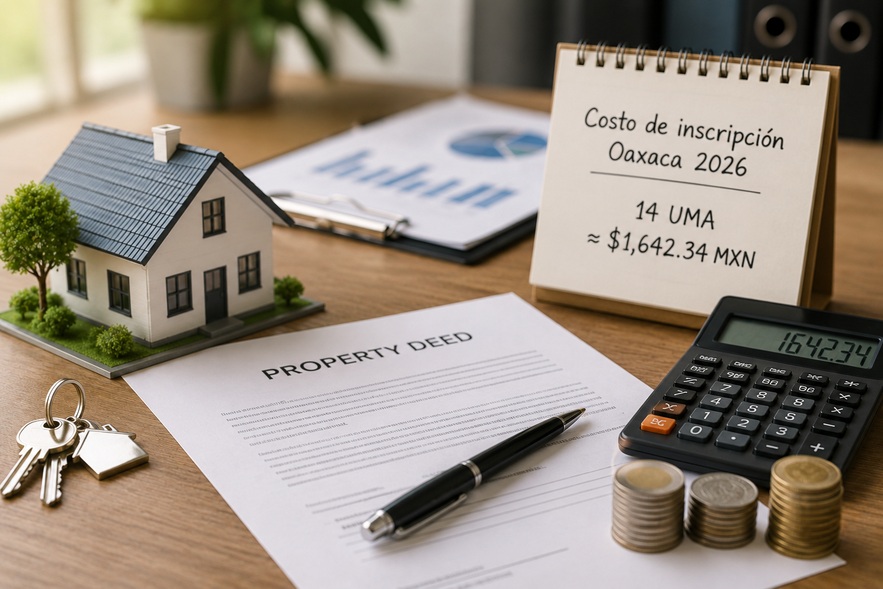
What does it take to buy a property in Mexico?

What do you need to buy a property? In practical terms, you need a realistic budget, valid personal documents, a defined payment method, and a legal and physical review of the property. At Viva México Inmobiliaria, we explain each requirement so you can make an informed decision and protect your assets.
Buying a house, apartment, or lot is not simply a matter of finding an attractive property and paying its price. It also involves verifying who the owner is, confirming that there are no outstanding debts or legal disputes, reviewing the physical condition of the property, formalizing the transaction before a notary public, and considering all additional expenses.
Basic requirements for buying a property
To acquire real estate in Mexico, you need to cover five main areas:
-
Know clearly how much you can afford.
-
Decide whether you will purchase with your own funds or financing.
-
Gather your personal documents.
-
Verify the property's legal and technical documentation.
-
Formalize the purchase through a public deed.
The exact process may vary depending on the type of property, its location, the payment method, the legal status of the land, and the financial institution's requirements.
Define your budget before looking for a property
The first step is to calculate how much money you can allocate to the transaction without compromising your other financial obligations.
Your budget should not be limited to the advertised price. You should also consider:
-
Down payment, when using a mortgage loan.
-
Property appraisal.
-
Notarial expenses.
-
Taxes related to the acquisition.
-
Registration fees with the Public Registry of Property.
-
Origination fees and insurance, when financing is involved.
-
Maintenance or administration fees.
-
Repairs, improvements, and moving expenses.
-
Utilities that still need to be contracted.
A good practice is to keep an additional margin to cover unexpected expenses. This prevents you from having to stop the transaction or resort to more expensive financing.
Determine why you want to buy the property
Before comparing properties, define the purpose of the purchase. A primary residence is not evaluated in the same way as a vacation rental property, an apartment for investment, or a lot for development.
Ask yourself the following:
-
Will the property be used for living or investment?
-
What location do you need?
-
How many square meters are sufficient?
-
Which services must be available?
-
Do you need parking, amenities, or common areas?
-
What maintenance expenses can you afford?
-
Do you plan to build, rent, or sell later?
These answers will help you rule out options that do not match your goals, even if they appear to have an attractive price.
Decide how you will pay for the property
A property may be purchased with personal funds, a mortgage loan, developer financing, or through programs offered by institutions such as Infonavit or Fovissste.
Purchase with personal funds
Even when paying in full, you must demonstrate the lawful origin of the funds and make payments through methods that provide evidence of the transaction.
Avoid delivering large amounts in cash or transferring money to third-party accounts without a contract, receipt, and prior review of the property.
Purchase with a mortgage loan
Requirements vary between institutions, but they generally consider:
-
Applicant's age.
-
Verifiable income.
-
Employment stability or economic activity.
-
Credit history.
-
Payment capacity.
-
Amount available for the down payment.
-
Value and condition of the property.
Before accepting a loan, compare the interest rate, term, monthly payment, fees, mandatory insurance, and total cost of financing.
You should also obtain an authorization letter or proof of loan approval before committing to payment dates you may not be able to meet.
Buyer's personal documents
The notary's office, financial institution, or real estate agency may request the following documents:
-
Valid official identification.
-
CURP.
-
Birth certificate.
-
RFC or tax status certificate.
-
Recent proof of address.
-
Marriage certificate, divorce decree, or marital property agreement, when applicable.
-
Proof of income.
-
Bank statements.
-
Mortgage loan authorization letter.
-
Information regarding the source of the funds.
When the property will be acquired by more than one person, each buyer must provide their documentation.
Requirements may also change when the buyer is a company, a foreign national, a legal representative, or someone acting under a power of attorney.
Documents you should request from the seller
Reviewing the buyer's documents is not enough. The security of the transaction mainly depends on whether the seller can prove that they have the legal authority to transfer the property.
Request and review:
-
Official identification of the owner.
-
Birth certificate and civil status documents.
-
Public deed or property title.
-
Registration details from the Public Registry of Property.
-
Certificate of no liens or certificate showing existing liens.
-
Paid property tax receipts.
-
Water and other utility receipts.
-
Current appraisal, when necessary.
-
Certificate of no outstanding maintenance fees, if the property is part of a condominium.
-
Condominium regulations.
-
Applicable plans, licenses, and permits.
-
Power of attorney, when a representative is involved.
-
Succession documents, if the property comes from an inheritance.
If several owners appear on the deed, all of them must participate in the transaction or be properly represented.
Verify that the seller is the lawful owner
The deed must match the seller's identity, the location of the property, its measurements, boundaries, and the surface area being offered.
The notary must review the registry history, but it is also advisable to request this verification before paying a significant deposit.
Pay special attention when:
-
The seller's name does not match the deed.
-
The property is registered in the name of a deceased person.
-
There is a pending divorce, succession, or co-ownership matter.
-
The seller is acting under a power of attorney.
-
The physical measurements do not match the documents.
-
The property is not properly registered.
-
Only an old private agreement is offered.
-
There are lawsuits, attachments, mortgages, or registry annotations.
A person who lives in, manages, or possesses a property is not necessarily its legal owner.
Confirm that the property is free of liens
A certificate of no liens allows you to determine whether there are mortgages, attachments, or other registered encumbrances on the property.
If a mortgage appears, the purchase may still be completed, but a formal procedure will be required to pay it off and cancel it. This process must be clearly documented and coordinated with the creditor institution and the notary.
Do not accept a verbal promise that the lien will be removed after payment.
Review outstanding property tax, water, and maintenance fees
The seller must prove that all payments related to the property are current.
Verify:
-
Property tax.
-
Water service.
-
Maintenance fees.
-
Special condominium assessments.
-
Contracted services.
-
Applicable local contributions.
For an apartment or a property within a residential development, request a certificate of no outstanding balance issued by the administration.
Also check whether there are approved special assessments that have not yet been charged, as they may become a future expense.
Request a physical inspection of the property
Photographs and virtual tours do not replace an in-person visit. Inspect the property during the day and, when possible, after rainfall to detect leaks or drainage problems.
Review mainly:
-
Structure and possible cracks.
-
Moisture and waterproofing.
-
Electrical installations.
-
Pipes and water pressure.
-
Drainage.
-
Doors and windows.
-
Roofs and finishes.
-
Operation of bathrooms and kitchen.
-
Condition of the cistern, rooftop water tank, pumps, and water heater.
-
Condition of common areas.
-
Access points and parking.
For used properties, large projects, or older buildings, consider hiring an independent architect, engineer, or specialist.
Verify the location and surroundings
A property may be legally in order and still not be suitable for your needs.
Before buying, review:
-
Vehicle and pedestrian access.
-
Availability of water, electricity, and drainage.
-
Transportation and road access.
-
Risks of flooding, landslides, or erosion.
-
Noise and nearby commercial activity.
-
Planned urban development projects.
-
Security and street lighting.
-
Distance to hospitals, schools, and stores.
-
Construction restrictions.
-
Local real estate market conditions.
Also visit the area at different times of day and speak with neighbors or administrators to learn about problems that may not appear in a listing.
Check land use and permits
Land use regulations indicate which activities and constructions are permitted on the property. This is especially important when you want to develop apartments, commercial spaces, lodging, offices, or a tourism project.
Also verify:
-
Construction license.
-
Official alignment and street number.
-
Construction completion or regularization.
-
Approved plans.
-
Environmental restrictions.
-
Condominium regime.
-
Subdivision or merger permits.
-
Permitted density and height.
Do not assume that you will be able to build a project simply because the lot has sufficient surface area.
What should you review when buying land?
Buying land requires a different review from purchasing a completed house. In addition to the price and location, you must confirm:
-
Legal status of the land.
-
Deed or document proving the rights.
-
Registry registration.
-
Measurements and boundaries.
-
Legal access to the property.
-
Availability of utilities.
-
Land use.
-
Construction restrictions.
-
Topographic conditions.
-
Natural risks.
-
Rights of way or easements.
-
Agrarian status, when applicable.
Request a land survey if there are doubts about the surface area, boundaries, or exact location.
Ejido and communal land
In some areas of Oaxaca, privately owned properties exist alongside ejido or communal land. Therefore, it is essential to identify the legal status before paying any money.
A certificate of possession, a local certificate, or a private agreement should not automatically be treated as equivalent to a public deed for private property registered with the Public Registry.
When the land remains under an agrarian regime, the transfer must comply with specific procedures under the Agrarian Law and the National Agrarian Registry. If it is claimed that the land already has full private ownership, request the corresponding title and verify its registration.
Because of the complexity of these transactions, the documentation should be reviewed by professionals experienced in real estate and agrarian law.
Analyze the property appraisal
An appraisal is a professional estimate of the property's value. It allows you to compare the asking price with its characteristics, location, surface area, physical condition, and market conditions.
It may also be necessary to:
-
Apply for a mortgage loan.
-
Calculate certain taxes and contributions.
-
Formalize the deed process.
-
Negotiate the price.
-
Detect significant differences in surface area.
An appraisal does not replace the legal review or physical inspection. A property may have an appropriate market value while also presenting documentation problems.
Submit a written offer
Once you have reviewed the property, you may submit a formal offer. The document should specify:
-
Offered price.
-
Payment method.
-
Amount provided as a reservation deposit.
-
Validity period of the offer.
-
Conditions for proceeding.
-
Estimated signing date.
-
Consequences if the documentation is not approved.
-
Treatment of the money if the loan is denied.
Do not pay a reservation deposit without knowing whether it is refundable and under what circumstances.
Carefully review the purchase agreement
The agreement must be read and understood before it is signed. Do not rely only on verbal agreements, messages, or advertisements.
At a minimum, it should include:
-
Complete buyer and seller information.
-
Description and identification of the property.
-
Ownership history.
-
Total price.
-
Payment method and schedule.
-
Amount paid as a deposit.
-
Deed execution date.
-
Responsible notary.
-
Status of liens and outstanding debts.
-
Delivery date and conditions.
-
Included goods, furniture, or fixtures.
-
Penalties for breach.
-
Cancellation conditions.
-
Responsibility for expenses and taxes.
Any promised repair, discount, equipment, or condition must be included in writing.
What is the notary's role?
The notary provides legal certainty and coordinates the formalization of the purchase.
The notary's functions include:
-
Verifying the identity and legal authority of the parties.
-
Reviewing the ownership history.
-
Requesting certificates and official records.
-
Confirming the existence of liens.
-
Preparing the deed.
-
Calculating or coordinating taxes, government fees, and expenses.
-
Certifying the signatures.
-
Managing the registration of the deed.
The notary does not replace a technical inspection or decide whether the property is a good investment for you. The notary's participation focuses mainly on the legality and formalization of the transaction.
Additional requirements for new properties or pre-construction purchases
When buying from a developer, you should request clear information about:
-
Executive project plans.
-
Licenses and permits.
-
Plans.
-
Materials and finishes.
-
Private surface area and common areas.
-
Services and infrastructure.
-
Delivery date.
-
Total price.
-
Additional expenses.
-
Cancellation conditions.
-
Penalties.
-
Warranties.
-
Legal status of the land.
In housing transactions regulated by consumer protection provisions, the supplier must use contracts that comply with the applicable requirements and provide verifiable information.
Minimum warranties include five years for structural matters, three years for waterproofing, and one year for other elements included in the agreement.
Warning signs when buying a property
Stop the transaction and request a specialized review when you identify any of the following situations:
-
You are pressured to pay immediately.
-
The price is considerably lower than comparable properties.
-
You are not allowed to review the original documents.
-
The seller avoids meeting with a notary.
-
Deposits are requested to third-party accounts.
-
They promise to regularize the property after the purchase.
-
The measurements do not match the deed.
-
There are several owners and one of them is not participating.
-
Only a private agreement or certificate of possession is provided.
-
There is no legal access or available utilities.
-
The construction lacks permits.
-
The offered conditions do not appear in the agreement.
A legitimate real estate opportunity should be able to undergo a documentary, registry, and physical review.
Checklist before paying any money
Before paying a reservation deposit, advance payment, or down payment, confirm that:
-
You know the seller's identity.
-
You reviewed the ownership document.
-
The property matches the documentation.
-
There are no unknown liens.
-
Property tax, water, and maintenance payments are current.
-
You know the legal status of the land.
-
You visited and inspected the property.
-
You confirmed the permitted land use.
-
You calculated the additional expenses.
-
Your financing is approved or formally in process.
-
The agreement establishes what will happen to the money paid.
-
The receiving account belongs to the authorized person or entity.
-
A notary or specialist will review the transaction.
Find properties with specialized guidance
Once you have defined your budget, payment method, and requirements, you can compare houses in Oaxaca, view apartments for sale, or explore land for sale.
In every case, prioritize properties whose documentation can be verified and request professional guidance before signing agreements or paying significant amounts.
Conclusion
To buy a property, you need more than the money required for the sale price. You must define your budget, gather your documents, review the property's legal status, verify that there are no outstanding debts, evaluate its physical condition, and formalize the transaction before a notary.
The key is not to rush. A preventive review can help you identify liens, surface area discrepancies, land-use restrictions, agrarian issues, or expenses you had not considered. Buying with proper information helps protect your assets and allows you to make a decision aligned with your goals.
Frequently asked questions
How much money do I need to buy a property?
You need to consider the purchase price or down payment, as well as notarial expenses, appraisal fees, taxes, registry fees, commissions, insurance, and possible repairs. The exact amount varies according to the state, the property's value, and the payment method. Keep an additional fund to cover unforeseen costs.
What documents does a property buyer need?
Generally, you will be asked for official identification, CURP, RFC, birth certificate, proof of address, and civil status documents. When financing is involved, proof of income, bank statements, and an authorization letter are also required. The final list should be confirmed with the notary's office and the financial institution.
Can I buy a property without a deed?
It is a high-risk transaction. A private agreement, assignment, or certificate of possession does not always prove registered private ownership. Before paying, you must identify the legal status, verify the history, and consult a notary or lawyer. Different procedures apply to agrarian land.
Who pays the notarial expenses when buying real estate?
Generally, the buyer pays the expenses related to the acquisition and deed process, while the seller handles the corresponding tax obligations. However, the allocation may vary according to local law and the agreement between the parties. Everything must be clearly established in the purchase agreement.
What should I review before buying a used house?
Review the deed, certificate of no liens, property tax, water, maintenance, and the seller's identity and civil status. Also inspect the structure, moisture, installations, utilities, measurements, and surroundings. An appraisal helps determine the property's value, but it does not replace legal verification or a physical assessment by specialists.
Is it mandatory to use a notary when buying a property?
Notarial intervention is necessary to formalize the purchase through a public deed and manage its registration. The notary verifies documents, history, and liens, but it is advisable to involve the notary before paying significant amounts. Complex transactions may also require additional legal, technical, or agrarian advice.