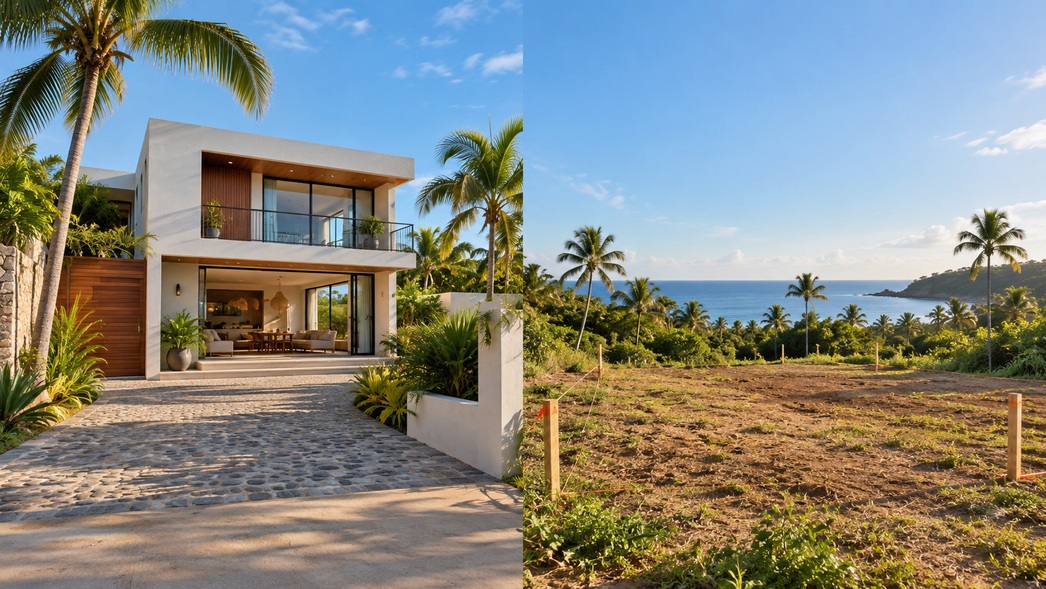
What's the first thing I need to do if I want to buy a house?
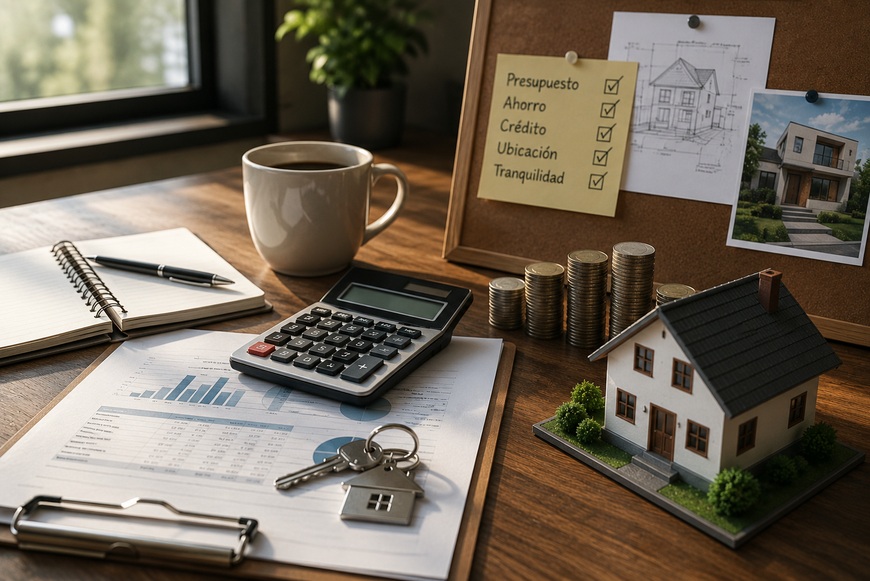
If you're wondering what is the first thing I need to do if I want to buy a house?, the answer is simple: before looking for properties, you need to know how much you can realistically afford and how you will finance the purchase. At Viva México Inmobiliaria, we want to explain the process from the beginning so you can make informed decisions and avoid committing to a home that is beyond your means.
Buying a house does not begin with visiting properties or choosing a neighborhood. It starts by reviewing your income, savings, debts, payment capacity, and financing options. After that, you can define what type of home to look for, compare alternatives, and verify that the property has an appropriate legal status.
What should I do first before buying a house?
The first step to buying a house is defining your actual budget. You need to know how much money you have available for the down payment and other transaction-related expenses, how much you can allocate each month toward a mortgage, and how much financing you may be able to obtain.
To get started, review:
-
Your verifiable monthly income.
-
Your fixed and variable expenses.
-
The debts you are currently paying.
-
The savings available for the purchase.
-
Your credit history.
-
The amount you can allocate each month toward housing.
-
The additional funds you will need for paperwork and formalization.
Having this information from the beginning helps you avoid wasting time looking at homes that you ultimately will not be able to finance.
1. Define how much you can afford to pay for a house
One of the most common mistakes when buying a home for the first time is starting the search using only the sale price as a reference.
The cost of buying a house may involve other expenses related to the transaction, such as:
-
Down payment.
-
Appraisal.
-
Notary fees.
-
Deed preparation and registration.
-
Applicable taxes and fees.
-
Mortgage-related expenses.
-
Possible improvements or repairs.
-
Moving and utility setup expenses.
For this reason, it is important to separate the property price from the total budget available to complete the purchase.
Create a realistic monthly budget
Write down how much money you receive each month and subtract your regular expenses:
-
Food.
-
Transportation.
-
Utilities.
-
Current rent.
-
Tuition or school expenses.
-
Insurance.
-
Credit cards and other loans.
-
Personal expenses.
-
Savings and emergency fund.
The remaining amount will give you a much clearer idea of the monthly payment you could afford without putting excessive strain on your finances.
The goal is not to obtain the largest mortgage possible, but to buy a house that you can afford sustainably.
2. Review how much you have saved
Savings play an important role because you will usually need to contribute your own funds during the purchasing process.
In addition to a possible down payment, there may be expenses associated with the mortgage, appraisal, paperwork, taxes, and formalization of the transaction.
For that reason, avoid using absolutely all your savings to purchase the property.
Keeping an emergency fund after the transaction can help you deal with repairs, unexpected expenses, or changes in your income without immediately putting your new home payment at risk.
3. Check your credit history
If you plan to use a mortgage, reviewing your credit history in advance can help you understand your situation before submitting a formal application.
Financial institutions may evaluate factors such as:
-
Payment history.
-
Active loans and credit accounts.
-
Debt level.
-
Verifiable income.
-
Length of employment.
-
Payment capacity.
If you identify problems in your credit history, it is preferable to address them before you begin seriously negotiating for a property.
It is also advisable to avoid taking on significant new debt during the months when you are preparing to buy a home.
4. Find out what type of mortgage you can obtain
Once you understand your finances, you can begin analyzing your financing options.
In Mexico, there are different alternatives depending on your employment and financial situation, including:
-
Bank mortgage.
-
Infonavit loan.
-
Fovissste loan.
-
Co-financing options.
-
Purchase using your own funds.
Each alternative has different requirements, costs, terms, and conditions.
What should you compare when choosing a mortgage?
Do not compare mortgages based only on the advertised monthly payment.
Review factors such as:
-
Interest rate.
-
Total Annual Cost (CAT).
-
Loan term.
-
Approved amount.
-
Required down payment.
-
Included insurance.
-
Fees and commissions.
-
Conditions for making early payments.
-
Estimated total amount you will ultimately pay.
Knowing in advance how much financing you may qualify for also allows you to establish a much more realistic price range when searching for a home.
5. Define what type of house you need
After establishing your budget, the next important step is deciding what you are looking for.
Create a list separating your essential needs from features that would simply be desirable.
For example:
Essential features
-
Minimum number of bedrooms.
-
Number of bathrooms.
-
Location.
-
Vehicle access.
-
Available utilities.
-
Proximity to school or work.
-
Parking space.
Desirable features
-
Swimming pool.
-
Garden.
-
Terrace.
-
Ocean view.
-
Equipped kitchen.
-
Additional bedrooms.
-
Entertainment area.
This distinction can help you compare properties more rationally and prevent an attractive feature from causing you to overlook more important factors.
6. Choose the location carefully
You can change many things inside a house, but you cannot change its location.
Before buying, review the characteristics of the area at different times of day and, if possible, on different days of the week.
Consider:
-
Accessibility.
-
Transportation.
-
Basic utilities.
-
Stores and businesses.
-
Hospitals.
-
Schools.
-
Safety in the area.
-
Distance from your usual activities.
-
Nearby urban development.
-
Environmental characteristics of the area.
If you are buying as an investment, it is also worth analyzing what type of people look for properties in that location and which features they value.
7. Start searching for and comparing properties
Now you can begin looking at houses.
Avoid making a decision after viewing only one property. Comparing several options will help you better understand what the market offers within your budget.
Create a simple table with factors such as:
-
Price.
-
Location.
-
Lot size.
-
Construction area.
-
Bedrooms.
-
Bathrooms.
-
Age of the property.
-
Condition.
-
Utilities.
-
Type of documentation.
-
Estimated additional expenses.
The cheapest property is not necessarily the most convenient option. A home that requires major repairs could ultimately represent a higher overall expense.
8. Visit the house and inspect its physical condition
Photographs are useful for selecting options, but they should not replace an in-person visit whenever possible.
During the visit, check:
-
Walls and ceilings.
-
Signs of moisture.
-
Plumbing systems.
-
Electrical system.
-
Doors and windows.
-
Roof.
-
Floors.
-
Water pressure.
-
Drainage.
-
Ventilation.
-
Natural lighting.
-
Overall condition of the construction.
For used properties or when there are concerns about the construction, it may be advisable to request the opinion of a specialist before completing the transaction.
9. Verify the property's legal status
Finding a house you like does not mean you should immediately hand over a deposit.
Before committing a significant amount of money, you need to verify that the transaction can be carried out legally and that the seller has the authority to sell the property.
Documents and aspects that may need to be reviewed include:
-
Property owner's identity.
-
Deed or document proving ownership.
-
Property registry status.
-
Existence of liens or encumbrances.
-
Outstanding debts related to the property.
-
Property tax.
-
Utilities.
-
Appraisal when applicable.
-
Terms established for the purchase and sale.
The exact documentation required will depend on the property and the type of transaction.
Pay special attention to the property ownership regime
This point is particularly important in certain regions of Mexico.
A property with a public deed is not necessarily analyzed in the same way as a property located on land subject to an agrarian or communal ownership regime.
If you are interested in buying in Oaxaca or in areas where this type of land background may exist, the documentation should be reviewed especially carefully before making deposits or signing commitments.
10. Do not hand over money simply because of pressure
Phrases such as “there is another interested buyer” or “you need to reserve it today” should not replace proper due diligence.
Before making a reservation payment or deposit, make sure you understand:
-
Who will receive the money.
-
What the payment is for.
-
What happens if the purchase does not go through.
-
Under what circumstances it can be refunded.
-
How long the property will be reserved.
-
What obligations each party assumes.
Every significant payment should be properly documented.
11. Properly formalize the purchase
Once you have chosen a home, defined the financing, and reviewed the property's status, the formalization stage begins.
Depending on the transaction, the buyer, seller, financial institution, appraiser, advisors, and notary may be involved.
During this stage, documents, payment terms, and the obligations of each party are reviewed until the corresponding documents are signed.
The notary plays a fundamental role in legally formalizing the sale and in the procedures related to transferring ownership of the property.
The correct order for buying a house for the first time
If you want to visualize the entire process simply, you can follow this order:
-
Review your income, expenses, savings, and debts.
-
Define how much you can afford.
-
Check your credit history.
-
Analyze your financing options.
-
Determine the type of home you need.
-
Choose the areas where you want to search.
-
Compare different properties.
-
Visit the best options.
-
Inspect the physical condition of the home.
-
Verify the documentation and legal status.
-
Define the terms of the transaction.
-
Formalize the purchase.
-
Sign and complete the corresponding procedures.
In short: first understand your financial capacity, then look for the property, and finally verify that it can be purchased safely before handing over significant amounts of money or signing documents.
Mistakes you should avoid when buying your first home
Buying a home is an important financial and patrimonial decision, so it is worth avoiding some common mistakes.
Looking for a house without knowing your budget
You could end up becoming interested in properties beyond your means and making a financial decision that is difficult to sustain.
Using all your savings
Unexpected expenses may arise after the purchase. Maintaining some liquidity can give you greater financial peace of mind.
Choosing based only on appearance
An attractive house may have an inconvenient location, maintenance problems, or a documentation status that requires further analysis.
Signing documents without understanding them
Ask about any clause, penalty, date, obligation, or condition you do not understand before signing.
Handing over money before reviewing the property
Before making significant payments, it is advisable to know who is selling, what documentation exists, and what the exact terms of the transaction are.
Failing to consider additional expenses
Your budget should account for more than just the advertised price of the home.
When are you really ready to start looking for a house?
You are probably in a good position to begin a serious search when:
-
You have relatively stable income.
-
You know how much you can afford to pay each month.
-
You have savings available.
-
You know what type of financing you will use.
-
You have a maximum budget range.
-
You can clearly explain what type of home you need.
-
You have chosen one or more areas where you would like to live.
If you still cannot answer these questions, it is best to organize this information first.
Conclusion: start with your numbers, not with the house
So, what is the first thing I need to do if I want to buy a house? Before browsing listings or visiting properties, understand your numbers: how much you earn, how much you spend, how much you have saved, what debts you currently have, and how much you could allocate toward a home.
After that, you can research financing, define the features of your future home, and begin comparing options using clear criteria.
When you find a property that truly interests you, the physical and legal review should be completed before moving forward with significant financial commitments.
And if you already know your budget and are looking for options to live or invest, you can explore the houses for sale in Oaxaca available through Viva México Inmobiliaria and compare properties based on your preferred location, budget, and needs.
Frequently asked questions about buying a house
How much money should I have before I start looking for a house?
There is no universal amount because it will depend on the property's price and the payment method. What matters is having enough funds for a possible down payment, transaction-related expenses, and an additional emergency fund without completely exhausting your savings.
Should I apply for a mortgage first or look for a house first?
It is advisable to understand your financing capacity first, even if you have not yet chosen a specific property. Knowing approximately how much you may be able to borrow allows you to search within a realistic budget and helps you avoid negotiating for homes that you ultimately may not be able to finance.
What documents should I review before buying a house?
The documentation will depend on each transaction, but you should generally verify the seller's identity and authority to sell, review the document proving ownership, investigate the property's registry status, and check for possible liens or outstanding debts. The legal review should be completed before formalizing the purchase.
Is it necessary to inspect a house before buying it?
It is highly recommended to carry out a physical inspection before making a decision. Checking for moisture, installations, visible structural elements, utilities, general condition, and possible repairs allows you to better calculate the true cost of the property and reduce the risk of discovering major problems after the purchase.
What should I review if I want to buy a house in Oaxaca?
In addition to the price, location, and condition of the home, it is especially important to understand the property's legal ownership regime and the documentation supporting the seller's rights. In some areas, agrarian or communal land issues may exist, making a prior legal review particularly important.