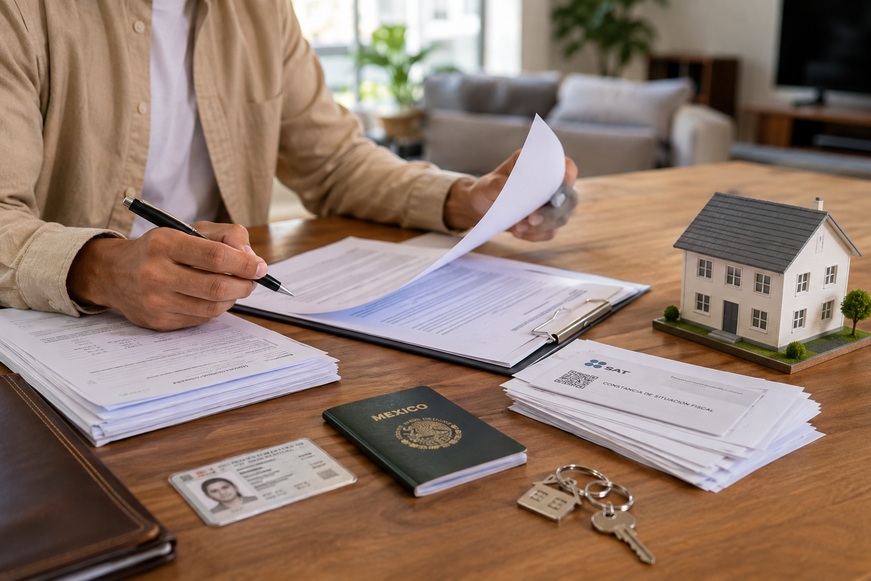
¿Qué conviene más, comprar una casa o un terreno?
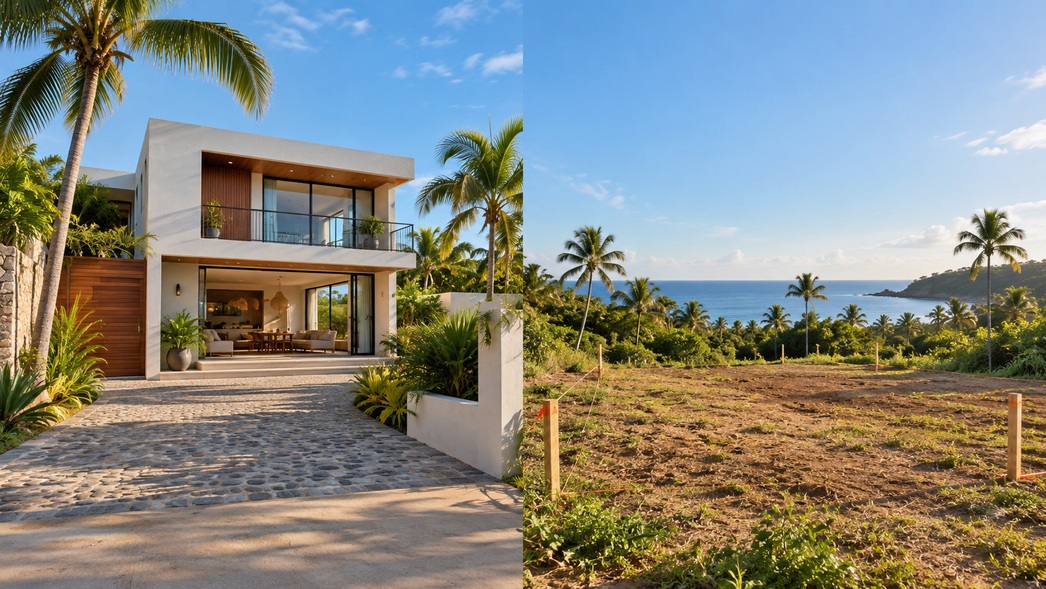
What is better, buying a house or land? It mainly depends on what you want the property for, how much you can invest, and when you need to use it. A house is usually more convenient if you want to live in it, rent it out, or make use of the property in the short term; land may make more sense if you can wait, want to build according to your needs, or are looking for an option with greater flexibility for the future.
At Viva México Inmobiliaria, we will explain which factors you should compare before making a decision, because the purchase price is only one part of the analysis.
House vs. land: quick comparison
| Factor | House | Land |
|---|---|---|
| Initial investment | Generally higher | May be lower |
| Immediate use | Yes | Usually not |
| Possibility of renting immediately | Yes, if it is in suitable condition | Limited without construction |
| Customization | Less | Greater |
| Future construction | Not necessary | May be necessary |
| Maintenance | Higher | Generally lower |
| Time before you can use it | Short | May be medium or long term |
| Additional upfront expenses | Closing costs, appraisal, improvements, among others | Closing costs, studies, utilities, and future construction |
| Appreciation | Depends on location, demand, and condition of the property | Depends on location, infrastructure, and development of the area |
| Project complexity | Lower if it is ready to occupy | Higher if you plan to build later |
This comparison quickly highlights a fundamental difference: a house addresses a present need, while land usually offers greater possibilities for developing a future project.
When does it make sense to buy a house?
Buying a house may be the most practical alternative when you need to use the property within a relatively short period of time.
A completed home allows you to avoid the entire process of designing, budgeting, obtaining permits, and carrying out construction. Once the purchase and any necessary improvements have been completed, you can live in it or use it for another permitted purpose.
It also allows you to know more clearly from the beginning what you are buying: built area, layout, bedrooms, bathrooms, finishes, installations, and overall condition.
Advantages of buying a house
Some of the main advantages include:
-
You can use it almost immediately after the transaction is completed.
-
You may be able to rent it out without first having to develop a construction project.
-
It is easier to estimate the initial cost of a completed property.
-
You can physically inspect the layout, spaces, and finishes before buying.
-
There are different mortgage financing alternatives available.
-
You avoid having to manage a construction project from scratch.
For example, someone who needs to move within the next few months will probably find it more useful to review homes for sale than to purchase land and begin a construction project.
Disadvantages of buying a house
The main disadvantage is usually the initial outlay, since the price includes both the land and the existing construction.
You should also consider:
-
Regular maintenance.
-
Repairs.
-
Potential remodeling.
-
Older installations in previously owned properties.
-
Less freedom to modify certain areas.
-
Expenses related to utilities and property upkeep.
An apparently inexpensive pre-owned house, for example, may require waterproofing, electrical upgrades, painting, carpentry, or major modifications. For this reason, comparing only the sale price can lead to the wrong conclusion.
When does it make sense to buy land?
Land may be a better option if you do not need a home immediately and want to preserve the freedom to decide what to build, when to build it, and how much to develop.
It can also be attractive for someone who wants to acquire an asset and hold it for several years in the hope that development in the area, infrastructure, and demand will increase its value. However, appreciation is not guaranteed and depends on the specific characteristics of the property and its surroundings.
Advantages of buying land
Land may offer:
-
A lower initial investment than a completed property in certain markets.
-
Greater freedom to design a home from scratch.
-
The possibility of building in stages if the conditions of the project allow it.
-
Lower maintenance requirements while the land remains undeveloped.
-
Flexibility to determine its future use in accordance with applicable regulations.
-
Potential appreciation if the area develops infrastructure and demand increases.
For someone who already has a place to live and wants to develop a customized home within a few years, exploring land for sale may be more consistent with that goal than paying now for a building they do not currently need.
Disadvantages of buying land
A lower initial price does not necessarily mean that the complete project will be less expensive.
After purchasing the land, additional expenses may arise related to:
-
Architectural design.
-
Topographic surveys.
-
Soil studies when necessary.
-
Site preparation.
-
Licenses and permits.
-
Construction.
-
Utility connections or service contracts.
-
Walls, access points, and exterior works.
-
Professional fees.
-
Increases in material and labor costs before construction begins.
For this reason, lower-priced land may ultimately require a greater total investment than buying a house, depending on the project you intend to develop.
The purchase price is not the total cost
This is one of the most important factors when comparing a house vs. land.
Suppose you have two hypothetical options:
Option A: completed house
Purchase price: $2,500,000.
In addition to the price, you should consider expenses associated with the transaction, possible repairs, maintenance, and improvements.
Option B: land
Purchase price: $1,000,000.
At first glance, it appears considerably less expensive. But if your goal is to live there, you will still need to account for the design, permits, site preparation, and construction of the home.
The correct comparison, therefore, is not:
house price vs. land price
but rather:
the total cost of buying and using the house vs. the total cost of buying, preparing, and developing the land.
That change in perspective can completely alter the decision.
Which option takes more time?
A completed house usually has an advantage when time is an important factor.
Although the purchase process involves paperwork, once the transaction has been formalized, the property already exists.
With land, on the other hand, purchasing it is only the first stage. If you want to build later, you will need to go through processes such as:
-
Defining your needs and budget.
-
Designing the project.
-
Analyzing the conditions of the property.
-
Obtaining the required permits.
-
Hiring and coordinating construction.
-
Monitoring progress and the budget.
-
Completing finishes and installations.
-
Preparing the property for use.
Therefore, if you need a home in the short term, a completed property will normally offer a simpler path.
Which has higher maintenance costs?
A house requires attention from the moment it begins to be used.
Painting, waterproofing, plumbing and electrical installations, equipment, gardens, doors, windows, and other parts of the construction require maintenance over time.
Undeveloped land normally has fewer elements to maintain, although this does not mean it can be completely ignored. Depending on the property, there may be expenses for cleaning, boundary marking, security, taxes, or upkeep.
The main difference is that a building ages and requires physical maintenance, while land itself has fewer components that can deteriorate.
Which is better for generating income?
If you want to generate rental income in the short term, a usable house has a clear advantage: there is already a property that can be offered for rent, provided its condition and applicable regulations allow it.
Land normally does not produce the same type of cash flow while it remains vacant. To generate income through a home, commercial premises, or another development, you will first need to invest in construction.
This does not automatically make a house a better investment. It simply responds more effectively to a goal of generating cash flow in the short term.
On the other hand, someone who does not need immediate income may place greater value on the possibility of holding land for several years or developing it later.
Does a house or land have greater appreciation potential?
There is no universal answer.
Both a house and land can increase in value, but appreciation depends on factors such as:
-
Location.
-
Supply and demand.
-
Infrastructure.
-
Accessibility.
-
Utilities.
-
Urban development.
-
Legal certainty.
-
Economic conditions.
-
Specific characteristics of the property.
For a house, the condition of the existing construction also matters. A property located in an area with increasing demand may rise in value, but a deteriorated building may require significant investment to maintain its appeal.
For land, future development of the area may generate appreciation, but buying solely because “the area will grow someday” involves risk. You need to analyze what infrastructure actually exists, which projects have been confirmed, and what uses are legally permitted on the property.
Expected appreciation should be analyzed as a possibility, not as a guaranteed return.
Financing: is buying a house the same as buying land?
Not necessarily.
There are mortgage products that can be used for different purposes, including purchasing a home, land, or financing construction. However, the terms, financing percentages, guarantees, and requirements depend on the product and financial institution.
Therefore, before making a decision based only on price, you should compare:
-
Required down payment.
-
Interest rate.
-
Annual Percentage Rate or total financing cost.
-
Loan term.
-
Appraisal.
-
Notary and closing expenses.
-
Insurance.
-
Fees and commissions.
-
The total amount you will ultimately pay.
It is also important to verify that the financial product actually applies to the type of property you intend to purchase. Not all financing alternatives work the same way for a completed home and for land.
What should you check before buying a house?
In addition to location and price, it is advisable to review:
Physical condition
Inspect the structure, moisture issues, installations, roof, floors, doors, windows, and any element that could require major repairs.
Documentation
You should verify that the seller can prove ownership and determine whether there are liens or other circumstances affecting the property.
Outstanding debts
Review the status of taxes, fees, and services associated with the property.
Future costs
Determine how much you will need to invest for the house to truly meet your needs. A major renovation should be included in your purchase budget.
What should you check before buying land?
When buying land, your review should go beyond simply checking its size.
Ownership and legal status
You need certainty about who owns the property and its legal status.
In certain cases, it is also important to determine whether the land is located within an agrarian community or subject to a legal regime that requires procedures different from an ordinary real estate transaction.
Land use regulations
Buying land does not mean you can build any project you want.
Before purchasing it, you should verify that the permitted land use is compatible with what you intend to develop.
Utilities
Confirm the actual availability of water, electricity, drainage, access roads, and any other necessary infrastructure.
The fact that utilities exist nearby does not necessarily mean that they are available directly on the property or that connecting to them will not involve additional costs.
Physical conditions
Slope, soil type, accessibility, shape, and dimensions can significantly affect construction costs and possibilities.
Inexpensive land may no longer be inexpensive if it requires major earthworks, specialized foundations, or significant investment to make it usable.
Which option is better depending on your objective?
A simple way to decide is to start with how you intend to use the property.
If you need a place to live soon
A house will probably be more convenient.
You avoid the time required to develop a construction project and can evaluate the property's characteristics from the beginning.
If you want to design a home from scratch
Land may be more convenient.
You will have greater freedom regarding layout and design, although you will need to assume the cost, time, and management involved in construction.
If you want to rent it out immediately
A house may be more suitable, provided it is ready to use and there is sufficient demand.
If your investment horizon is several years
Land may be an option worth considering, especially if you do not need to use it immediately. Whether it makes sense will depend on the purchase price, legal certainty, and actual development of the area.
If you have little time to manage projects
A completed house is usually more practical.
Building requires making decisions, coordinating professionals, reviewing budgets, and supervising progress.
If you have a limited initial budget
Land may allow you to enter with a lower initial outlay, but you should avoid confusing a lower acquisition cost with a lower total cost if you plan to build later.
Questions you should answer before deciding
Before signing a purchase agreement, ask yourself these questions:
-
Do I want to live there, or am I buying it as an investment?
-
Do I need to use the property soon?
-
How much money can I realistically allocate to the entire project?
-
Will I need financing?
-
Am I willing to manage a construction project?
-
How much would it cost to make an existing house exactly the way I want it?
-
How much would it cost to build on the land I am evaluating?
-
What expenses will I have after purchasing?
-
What is my investment horizon?
-
How easy would it be to sell the property if my plans change?
-
Is the property's documentation in order?
-
If it is land, can I legally and technically develop the project I have in mind?
Answering these questions is usually more useful than simply trying to determine whether “a house is better than land.”
So, what is better, buying a house or land?
A house is usually more convenient if you want immediate use, want to avoid the construction process, or plan to obtain value from the property in the short term.
Land may be more convenient if you have a medium- or long-term horizon, want to build according to your needs, and can assume the costs and time required to develop the project later.
Neither option is inherently superior.
A more expensive house may make sense if it saves you years of construction and additional expenses. Less expensive land may be a good decision if it is located in the right area and fits a viable future project. The opposite can also be true.
The best alternative is the one whose total cost, time before it can be used, risks, and potential uses align with your financial situation and objectives.
If you are evaluating both options, compare homes for sale and land for sale by considering not only the advertised price, but also location, size, documentation, financing, future expenses, and how you actually intend to use the property. This comparison will allow you to make a decision with a much more complete perspective.