
What are the 5 steps to buying a house?
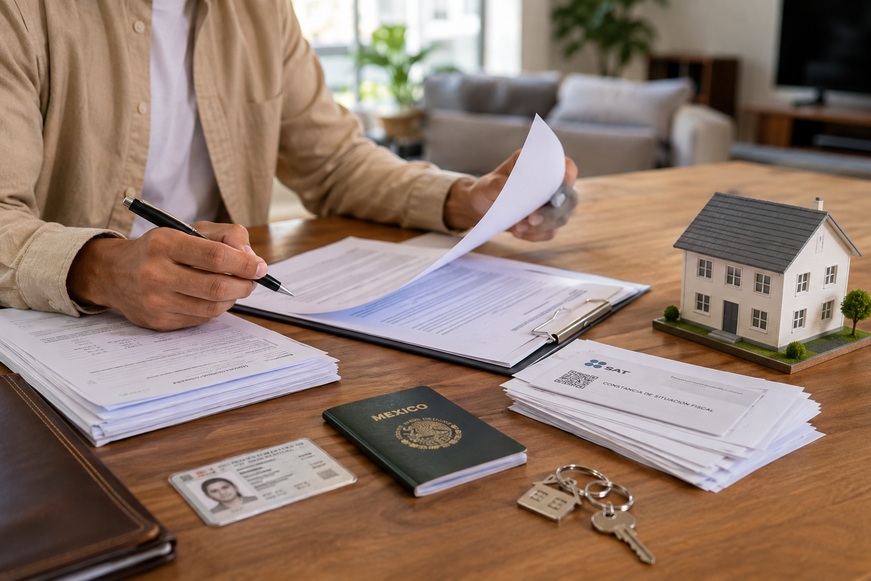
What are the 5 steps to buying a house? In simple terms, the process consists of determining how much you can afford, establishing what type of home you need, searching for and comparing properties, carefully reviewing the property and its documentation, and finally formalizing the purchase. At Viva México Inmobiliaria, we explain each stage so you know what to review before making a decision that will have an important impact on your finances and assets.
Buying a home should not begin by randomly visiting houses. A good purchase starts much earlier: with clear numbers, well-defined needs, and a proper review of the property.
Following an organized process also helps you avoid one of the most common mistakes among first-time buyers: falling in love with a house before knowing whether they can truly afford it or whether its legal and physical condition is appropriate.
What are the 5 steps to buying a house?
The five essential steps to buying a house are:
-
Define your budget and payment method.
-
Determine what type of house you need and where to look for it.
-
Search for, visit, and compare different properties.
-
Review the physical and legal condition of the home.
-
Formalize the purchase and complete the property deed process.
Although every real estate transaction may have its own particular characteristics, these stages provide a clear roadmap for organizing most home purchases.
1. Determine how much you can afford and how you will finance the purchase
Before searching for properties, you need to understand your actual financial capacity.
The advertised price of a house is not the only figure you should consider. Your budget should include both the value of the property and other expenses related to the purchase.
These may include:
-
Down payment.
-
Property appraisal.
-
Notary fees.
-
Deed expenses.
-
Taxes related to the transaction.
-
Fees or expenses associated with financing.
-
Initial repairs or improvements.
-
Moving expenses.
-
Home maintenance and utilities.
Keeping these expenses in mind from the beginning prevents you from using practically all of your savings for the down payment and then struggling to complete the transaction.
Calculate a monthly payment you can actually afford
If you plan to use a mortgage loan, do not determine your budget solely based on the amount a financial institution is willing to lend you.
The amount of credit you can obtain is one thing, while the monthly payment you can comfortably afford for several years is another.
Review your current income and expenses, including:
-
Food.
-
Transportation.
-
Tuition.
-
Insurance.
-
Existing debts.
-
Utilities.
-
Savings.
-
Family expenses.
-
Unexpected expenses.
The goal is for the purchase of a home to fit comfortably within your everyday finances rather than consuming nearly all of your financial capacity.
Compare different financing options
Depending on your employment and financial situation, you may have access to different alternatives, such as:
-
Bank mortgage loan.
-
Infonavit.
-
FOVISSSTE.
-
Co-financing options.
-
Personal funds.
-
A combination of savings and financing.
When comparing loans, do not look only at the interest rate.
Also review the total cost of financing, loan term, monthly payments, insurance, fees, early repayment conditions, and eligibility requirements.
Direct answer: before looking for a house, determine how much money you have available for the down payment and other expenses, how much you can afford to pay each month, and which financing options best fit your situation.
2. Define what type of house you need and in which location
Once you have established your budget, it is time to turn your needs into specific search criteria.
Before browsing any property listings, ask yourself:
-
How many bedrooms do I need?
-
How many bathrooms?
-
Do I need parking?
-
Do I want a garden or patio?
-
Am I looking for a new or pre-owned house?
-
How much space do I need?
-
Which areas interest me?
-
How important is it to be close to work or school?
-
Do I need nearby public transportation?
-
Which services are essential?
Separating your needs from your wants makes the decision much easier.
For example, having three bedrooms may be essential for a family, while having a large terrace may simply be a desirable feature.
Location can be just as important as the house
A house may perfectly meet your physical requirements and still not be the right choice if its location makes your daily life more difficult.
Analyze factors such as:
-
Access roads and streets.
-
Transportation.
-
Schools.
-
Hospitals and healthcare services.
-
Supermarkets and stores.
-
Availability of water and other basic services.
-
Commute time.
-
Development of the area.
-
Neighborhood characteristics.
It is also a good idea to visit the location at different times of day. A quiet street in the morning may feel completely different at night or during peak traffic hours.
Consider the area's potential
Even if you plan to live in the property for many years, it is worth considering how the area may develop over the long term.
Infrastructure, connectivity, new services, and urban growth can influence future demand in an area.
For this reason, when choosing where to buy a house, do not think only about your current needs. Also consider how your family, work, and lifestyle may change over the coming years.
3. Search for, visit, and compare several houses
Once your budget and criteria are defined, you can begin searching for properties.
One of the most common mistakes is making a decision after visiting only one home. Even if a house makes a great first impression, comparing alternatives helps you determine whether its price, location, and features are truly competitive.
Create a simple list to compare each property.
You can evaluate factors such as:
| Factor | What to review |
|---|---|
| Price | Whether it fits within your budget |
| Location | Commute, services, and accessibility |
| Size | Lot and construction area |
| Layout | Bedrooms, bathrooms, and living spaces |
| Condition | Necessary repairs |
| Documentation | Legal status of the property |
| Expenses | Maintenance and utilities |
| Surroundings | Noise, traffic, and neighborhood characteristics |
This helps you avoid making a decision based entirely on emotion.
Visit the property in person
Photos and virtual tours are useful for making an initial selection, but they do not replace an in-person visit.
During your visit, pay attention to elements that usually cannot be properly evaluated through photographs:
-
Moisture.
-
Cracks.
-
Ventilation.
-
Natural lighting.
-
Outdoor noise.
-
Water pressure.
-
Condition of doors and windows.
-
Electrical system.
-
Ceilings and floors.
-
Odors.
-
Overall condition of the construction.
If you notice a structural problem or have serious concerns about the construction, consider requesting an inspection by a specialist before making a commitment.
Practical tip: do not visit properties only to decide whether you "like them." Use each visit to gather information that you can later compare objectively.
4. Review the physical and legal condition of the home
Finding a house you like does not mean you are ready to buy it.
Before making significant payments or signing final documents, you should review both the physical condition and legal status of the property.
Confirm who owns the property
The person selling the property must have the legal authority to complete the transaction.
The corresponding documentation should be reviewed to confirm ownership and identify potential issues that could prevent or complicate the sale.
Depending on the transaction, it may be necessary to verify documents related to matters such as:
-
Property ownership.
-
Owner identification.
-
Liens or encumbrances.
-
Outstanding debts.
-
Property tax.
-
Water bills.
-
Property registry status.
-
Legal powers of attorney when someone acts on behalf of the owner.
The specific documentation may vary depending on the property and the transaction, which is why the involvement of real estate, legal, and notarial professionals can be especially important at this stage.
Review the actual condition of the house
The legal review and physical inspection should be carried out separately.
A property may have all of its documentation in order while still requiring expensive repairs.
Pay particular attention to:
-
Walls.
-
Ceilings.
-
Floors.
-
Electrical installations.
-
Pipes.
-
Drainage.
-
Moisture.
-
Cracks.
-
Doors and windows.
-
Waterproofing.
-
Finishes.
For a pre-owned home, understanding these conditions can also help you estimate how much money you may need to spend after the purchase.
Do not hand over money without understanding the terms of the transaction
Any reservation payment, deposit, advance payment, or other payment related to the purchase should be clearly documented.
Before providing funds, understand:
-
How much you are paying.
-
What the payment is for.
-
Under what conditions it can be refunded.
-
What obligations each party assumes.
-
What deadlines have been established.
-
What happens if either party fails to comply.
Buying a house involves much more than simply agreeing on a price. The transaction should be properly supported by documentation.
5. Formalize the purchase and complete the property deed process
After verifying the home, agreeing on the terms, and securing financing, the formalization stage begins.
At this point, the final terms of the transaction are established in writing.
The process may involve contracts, document reviews, a property appraisal, financing procedures, and participation by a notary public.
Read carefully before signing
Do not sign a document you do not understand.
Contracts should clearly establish matters such as:
-
Identification of the property.
-
Agreed price.
-
Payment method.
-
Dates and deadlines.
-
Buyer's obligations.
-
Seller's obligations.
-
Delivery conditions.
-
Penalties for non-compliance.
-
Special conditions agreed upon by both parties.
If there is any clause you do not understand, ask for an explanation before signing.
Why is the property deed important?
The deed process is a fundamental part of legally formalizing the acquisition of a property.
During this stage, the corresponding documentation is reviewed and the necessary procedures are carried out to formalize the transfer of ownership.
For this reason, buying a house does not end when you receive the keys. You should make sure that the corresponding legal and property registration process has been properly completed.
What should you review before buying a house?
Before making your final decision, use this checklist:
-
I have defined a maximum budget.
-
I know how much I can allocate to the down payment.
-
I have considered additional purchase expenses.
-
I have compared financing alternatives.
-
I have defined my main needs.
-
I have compared several properties.
-
I have visited the house in person.
-
I have reviewed the installations and overall condition.
-
I understand the characteristics of the neighborhood.
-
I have verified the property's documentation.
-
I have confirmed who has the legal authority to sell it.
-
I understand the terms of the contract.
-
I know how the deed process will be completed.
If you still have important questions about any of these points, it is better to resolve them before moving forward.
Common mistakes when buying a house for the first time
Following the five steps above can also help you avoid decisions that may complicate a real estate transaction.
Searching for properties without knowing your budget
Visiting homes that significantly exceed your purchasing capacity may lead you to try to adjust your finances to fit a property, when it should be exactly the other way around.
Define your budget first and then search within that range.
Choosing based only on appearance
A beautiful kitchen or newly remodeled facade may catch your attention, but they do not replace a proper review of the structure, installations, documentation, and location.
Failing to consider additional expenses
The amount of money needed to buy a home does not end with the advertised price.
You should set aside funds for expenses related to formalizing the transaction and for any improvements you may need when moving in.
Not comparing financing options
A mortgage may be part of your finances for many years. Choosing one simply because it was the first option approved for you may unnecessarily increase the financial cost of the property.
Signing while you still have questions
Rushing can be particularly risky in a real estate transaction.
If a condition, document, payment, or clause is unclear, resolve the issue before moving forward.
How long does it take to buy a house?
There is no identical timeline for every transaction.
The amount of time required depends on factors such as:
-
Whether you are paying in cash or using financing.
-
How quickly you find a property.
-
The status of the documentation.
-
The financing approval process.
-
The property appraisal.
-
Notarial procedures.
-
The conditions agreed upon between the buyer and seller.
For this reason, rather than trying to complete the purchase as quickly as possible, it is better to focus on completing each stage correctly.
A transaction that requires several additional steps can still be a good purchase if those steps help confirm that the property and its documentation are in proper condition.
Is it better to buy a new or pre-owned house?
Neither option is automatically better.
A new house may require fewer initial improvements, while a pre-owned home may offer certain locations, dimensions, or features that are difficult to find in newer developments.
When comparing both alternatives, consider:
-
Price.
-
Location.
-
Size.
-
Construction quality.
-
Age of the property.
-
Maintenance.
-
Necessary repairs.
-
Available services.
-
Layout.
-
Documentation.
The best option will be the one that combines your needs with your financial capacity and long-term goals.
Why is professional guidance important when buying a home?
Buying a property involves financial, commercial, technical, and legal considerations.
A buyer may know exactly what type of house they want while still being unfamiliar with important matters related to documentation, contracts, appraisals, or deed procedures.
Professional guidance does not replace your decision. Its purpose is to help you have more information before making it.
Conclusion: buying a house starts with proper preparation
The 5 steps to buying a house can be summarized in a simple sequence: organize your finances, define what you need, compare properties, carefully verify the home and its documentation, and properly formalize the transaction.
You do not need to become a real estate expert to buy a home, but you should understand what you are purchasing, how much it will really cost, and which documents support the transaction.
If you are already comparing options, you can explore the houses for sale in Oaxaca available through Viva México Inmobiliaria and apply these five steps to evaluate each property using clearer criteria before making your decision.
Frequently asked questions about the steps to buying a house
What is the first step to buying a house?
The first step is determining your financial capacity. Define how much you have saved, how much you can allocate to the down payment, what monthly payment you can afford, and which additional expenses you need to consider. Knowing your budget before searching for properties helps you avoid wasting time on options that do not fit your financial situation.
What documents should I review before buying a house?
You should verify the documentation needed to confirm who owns the property, its legal status, and whether there are any liens or outstanding debts. The required documents may vary depending on the transaction, so it is advisable to complete this review with professional and notarial support before formalizing the purchase.
What should I check when visiting a house for sale?
Check the condition of the walls, ceilings, floors, electrical systems, plumbing, moisture, ventilation, lighting, and possible cracks. Also consider noise, accessibility, services, and neighborhood conditions. If you identify issues that may affect the structure, consider requesting a professional inspection before moving forward with the purchase.
Is it necessary to compare several houses before buying?
It is not mandatory, but comparing different properties allows you to better understand the prices, sizes, locations, and conditions available within your budget. Even if you like the first home you visit, reviewing other alternatives can help you determine whether its price and features truly represent a suitable option for your needs.
What expenses should I consider besides the price of a house?
In addition to the price of the home, consider the down payment, appraisal, notary fees, deed expenses, applicable taxes, financing-related costs, moving expenses, and possible repairs. It is also advisable to keep some money available for unexpected expenses and the initial maintenance and utility costs after taking possession of the property.
When should I sign the purchase agreement?
You should move forward with signing once you have reviewed the condition of the property, the necessary documentation, the price, the payment method, and the obligations of both parties. Before signing, make sure you understand every clause and resolve any legal, financial, or property-delivery questions.