
Who pays the closing costs—the seller or the buyer?
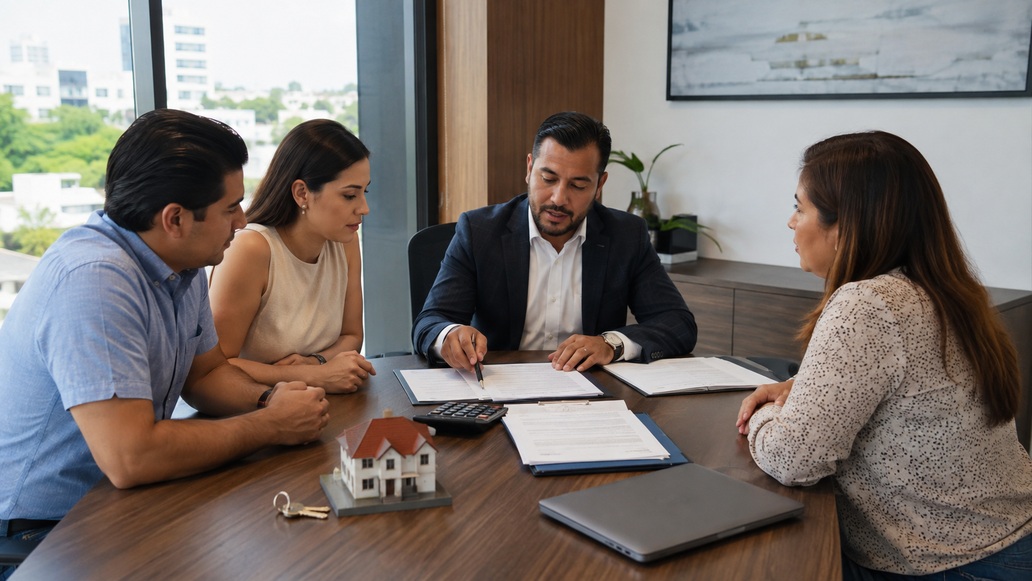
If you are about to complete a real estate transaction and are wondering who pays the closing and deed costs, the seller or the buyer?, in Mexico it is customary for the buyer to cover most of the deed and closing costs, including notary fees, property acquisition taxes, and registration fees with the Public Registry of Property. However, the distribution may vary depending on the transaction and what both parties agree upon.
At Viva México Inmobiliaria, we know these expenses can raise questions, especially when you are calculating how much money you actually need to purchase a property. That is why we will explain what each party typically pays, which costs are included in the deed process, and what you should review before signing, particularly if the transaction takes place in Oaxaca. (Viva México Inmobiliaria)
Quick answer: in a real estate transaction in Mexico, the buyer normally pays the deed and closing costs, while the seller assumes obligations related to the sale, such as Income Tax (ISR) when applicable and any outstanding debts that must be settled in order to complete the transaction.
What are property deed and closing costs?
When people talk about “paying for the deed,” they are not referring only to the document signed before the notary.
The deed process is a legal procedure that formalizes the transfer of ownership of a property and subsequently registers it with the corresponding Public Registry.
Some of the expenses that may be included in deed and closing costs are:
-
Public notary fees.
-
Property acquisition tax.
-
Registration fees with the Public Registry of Property.
-
Property appraisals required for the transaction.
-
Certificates and official records.
-
Administrative procedures related to the purchase and sale.
-
Copies and additional notarial documentation.
The notary also participates in calculating and withholding certain local and federal taxes related to the real estate transaction.
Who pays the deed costs when buying a house in Mexico?
In most real estate transactions in Mexico, the buyer is responsible for the deed and closing costs.
This is because the deed process allows the purchased property to be legally transferred into the buyer’s name. The exact distribution of expenses should be reviewed in the purchase agreement, as buyer and seller may reach specific arrangements regarding certain costs.
Therefore, if you are calculating how much you need to buy a house, condo, or lot, you should not consider only the advertised purchase price.
You also need to set aside money to legally formalize the acquisition.
What expenses does the buyer usually pay?
Although every transaction should be reviewed individually, the buyer generally needs to consider the following expenses.
Notary fees
The notary verifies the property documentation, prepares the deed, formalizes the purchase and sale, and carries out different procedures related to the transfer of the property.
Fees may vary depending on the state, property value, and characteristics of the transaction.
Property acquisition tax
The buyer must take into account the local tax generated by the acquisition of the property.
Its name, calculation method, and applicable rate may vary depending on the state or municipality where the property is located, so the exact amount must be determined for each individual transaction.
Public Registry of Property
After the purchase and sale has been formalized, the deed must go through the corresponding process in order to be registered with the Public Registry of Property.
This procedure involves registration fees that should be included in the budget when purchasing real estate.
Appraisals, certificates, and other procedures
Depending on the characteristics of the property and the transaction, appraisals, certificates, official records, and other documents may be required.
For this reason, there is no single deed or closing cost that can be applied to every property.
What expenses does the seller have to pay?
The fact that the buyer normally pays the deed and closing costs does not mean that every expense involved in a real estate transaction is the buyer’s responsibility.
The seller may also have financial obligations related to the transaction.
Income Tax on the sale
When a person sells real estate, the transaction may generate Income Tax (ISR) on the sale of the property, and the calculation depends on the specific characteristics of the transaction.
There are circumstances in which the sale of a primary residence may qualify for a tax exemption if the corresponding tax requirements are met, so it should not be assumed that every seller will pay exactly the same amount of ISR.
Outstanding debts related to the property
Before completing a sale, obligations such as property tax and other outstanding debts that could affect the transaction should be reviewed.
If there is an outstanding balance that belongs to the previous owner, it will normally need to be settled so the transaction can proceed correctly.
Legal status of the property
It must also be verified that the person selling the property actually has the legal authority to transfer ownership and that the property’s registration status is in order.
Reviewing liens, mortgages, and registration history is essential before paying the full purchase price of a property.
Buyer vs. seller: who pays each expense?
As a general reference, this is how the expenses are typically distributed:
| Expense | Buyer | Seller |
|---|---|---|
| Deed and notary fees | Generally yes | According to the agreement |
| Property acquisition tax | Yes | No |
| Registration of the new deed | Generally yes | No |
| Appraisals and acquisition procedures | May be responsible | Depends on the procedure |
| Income Tax (ISR) on the sale | No | Yes, when applicable |
| Outstanding property tax debts | Should not be transferred | Must be settled |
| Expenses expressly agreed upon in the contract | According to the agreement | According to the agreement |
This table is intended as a general guide. The final distribution should be determined according to the characteristics of the transaction and the corresponding documentation.
How much does it cost to obtain a property deed in Mexico?
As a general reference, different specialized sources in Mexico estimate the total deed and closing costs at approximately 4% to 7% of the property’s value, although this percentage is not a fixed nationwide rate.
The amount may vary due to factors such as:
-
The state and municipality where the property is located.
-
The value of the property.
-
Applicable taxes.
-
Notary fees.
-
Property appraisal.
-
Registration fees.
-
Required certificates.
-
Legal characteristics of the transaction.
For example, if a property is valued at $3,000,000 MXN, using a purely indicative range of 4% to 7% would represent approximately $120,000 to $210,000 MXN.
This does not mean that you will necessarily pay that amount. An accurate estimate should be requested based on the specific property you intend to purchase.
Can you negotiate who pays the deed and closing costs?
Yes, the buyer and seller can agree on how certain expenses related to the transaction will be covered, which is why it is important to clearly establish these terms in the contract.
You should not wait until the day of signing while assuming who will pay each expense.
Before paying a deposit or signing the agreement, make sure the following points are clearly defined:
-
Final purchase price.
-
Payment method and payment dates.
-
Expenses to be paid by the buyer.
-
Expenses to be paid by the seller.
-
Status of taxes and outstanding debts.
-
Conditions required to formalize the deed.
-
Expected property delivery date.
This reduces the possibility of encountering unexpected expenses when the transaction is already well underway.
Are notary fees and deed costs the same thing?
Not exactly.
Notary fees are only one part of the total deed and closing costs.
When you receive an estimate for the deed process, it may include several different items such as taxes, Public Registry fees, notary fees, certificates, and other procedures.
For this reason, when requesting an estimate, it is advisable to ask for a complete breakdown of expenses rather than simply asking how much the notary charges.
What happens if you buy a house with a mortgage?
If the purchase is financed, in addition to the expenses associated with the real estate transaction itself, there may also be procedures and costs related to the mortgage.
Before committing your budget, you should review with the financial institution and the notary how much you will need to contribute in addition to the down payment.
The National College of Mexican Notaries recommends understanding the taxes and fees associated with the acquisition in advance so they can be included in the buyer’s financial planning.
Why is obtaining a property deed important?
A public deed provides legal certainty regarding the acquisition of the property and makes it possible to properly formalize the transfer of ownership.
Buying through a private agreement and leaving the deed process unfinished may create complications later, especially when trying to sell, inherit, mortgage, or legally prove ownership of the property.
The notary also reviews relevant information about the person transferring the property and its registration status before formalizing the transaction.
A special consideration when buying property in Oaxaca
In Oaxaca, it is especially important to first confirm the legal status and ownership regime of the property you intend to purchase.
Not all land is necessarily governed by the same legal system. Privately owned property registered with the Public Registry should not be analyzed in the same way as an ejido parcel or land subject to agrarian law.
In the case of ejido parcels, Mexican law establishes specific procedures for adopting full private ownership. Once the corresponding legal requirements are met, a property title may be issued and registered so that the property becomes subject to ordinary private property law.
Therefore, before asking how much the deed will cost, you should first determine what type of legal right exists over the property and which legal procedure applies.
This is particularly relevant in areas along the Oaxaca Coast, where properties may have different legal situations. At Viva México Inmobiliaria, we place particular importance on reviewing documentation and providing greater legal certainty throughout the acquisition process.
What should you review before paying deed and closing costs?
Before formalizing the purchase of real estate, verify at least the following points:
-
That the person selling the property has the legal authority to do so.
-
That the ownership documents correspond to the property being offered.
-
That any liens or mortgages have been reviewed.
-
That property taxes and outstanding debts have been verified.
-
That you know the estimated deed and closing costs in advance.
-
That the contract clearly establishes who will pay each expense.
-
That the transaction can be properly registered with the corresponding property registry authority.
It is not advisable to pay significant amounts of money simply because a property has an attractive price. Its legal and documentary status should be reviewed before completing the purchase.
So, who should pay the deed and closing costs?
In Mexico, it is most common for the buyer to pay the main deed and closing costs, since the buyer is acquiring the property and ownership will be legally formalized and registered in their name.
The seller, on the other hand, must comply with the obligations associated with the sale, such as Income Tax (ISR) when applicable and the settlement of any outstanding debts that must be resolved in order to complete the transaction.
The important thing is not to rely solely on a general rule: before signing, request an estimate of all expenses and clearly establish in the contract who will pay each one.
If you are considering purchasing property on the Oaxaca Coast, in addition to the purchase price and deed costs, it is advisable to begin by choosing a property whose legal status can be properly verified. You can explore our houses for sale in Oaxaca and discover different options available to begin your search.
Frequently asked questions about who pays deed and closing costs
Does the buyer always have to pay the deed costs?
Not necessarily. In Mexico, it is common for the buyer to assume most of the deed and closing costs, but the distribution may depend on the transaction and what is established in the contract. Before signing, it is advisable to request a detailed notarial breakdown and define in writing what each party will pay.
What taxes does the buyer pay when obtaining a property deed?
The buyer normally needs to consider the local tax associated with acquiring the property, in addition to registration fees and other expenses related to the deed process. The name, rate, and calculation method may vary by state and municipality, so the amount should be determined specifically for each property.
What tax does the seller pay when selling a property?
The seller may be required to pay Income Tax (ISR) on the sale of the property. However, the amount depends on each transaction, and exemptions may apply to the sale of a primary residence when the established requirements are met. The notary participates in determining the corresponding tax treatment when formalizing the transaction.
When are deed and closing costs paid?
The funds required for taxes, registration fees, and notary fees must be available during the process of formalizing the real estate transaction. The exact timing may vary depending on the notary and the characteristics of the transaction. For this reason, it is advisable to request an estimate before committing all available savings to the down payment or purchase price.
How much should I save in addition to the price of a house?
As a general reference, approximately 4% to 7% of the property’s value is often mentioned for deed and closing costs, although this is not a fixed rate. The final amount will depend on the property, its location, taxes, notary fees, registration fees, and required procedures, so a specific estimate should always be requested.